
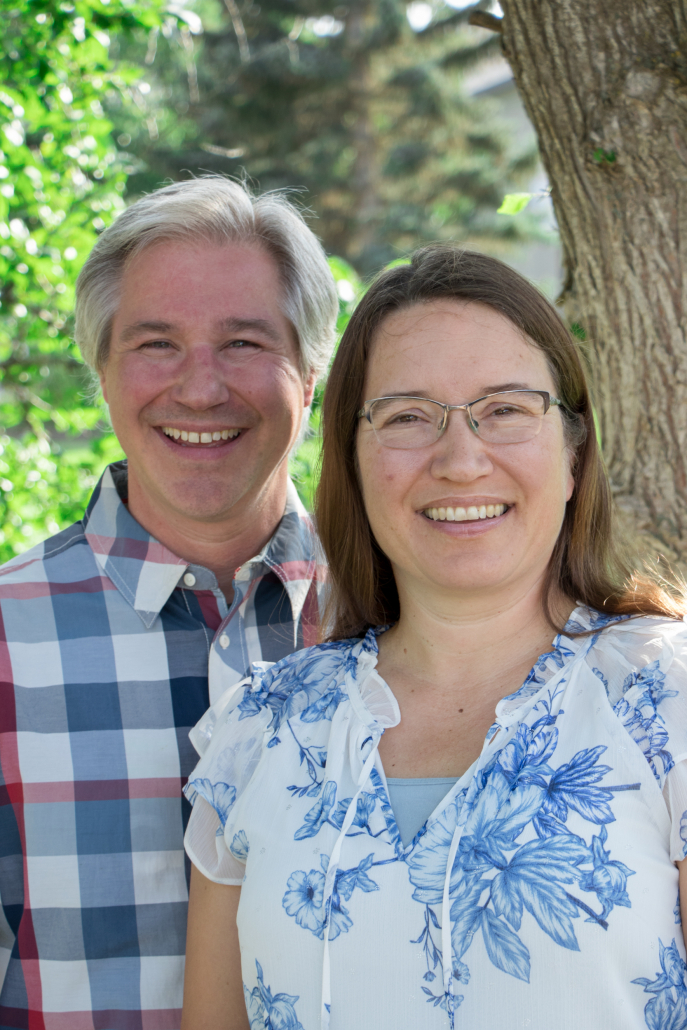
SRMTA Member, Janet Gieck and Dr. Lorn Gieck
Panbrun SK
Empowering Ensembles
Music is often celebrated as the lone pursuit of the devoted artist. Playing an instrument requires dedication and discipline with many isolated hours in practice. Yet, cultivating determination and self-control are not the end goal of music making. The experience and enjoyment of music is ultimately meant to be shared with others.
At the Fall 2025, Saskatchewan Registered Music Teacher’s Conference, Lorn & Janet Gieck presented a seminar entitled “Empowering Ensembles.” The presentation examined the model of Community Music to investigate how a socially directed approach can benefit music students in the private studio. This article provides an overview of the main points from the seminar. Community Music was defined then discussed in an application of principles in a studio piano recital. The end goals and purposes formed the conclusion of the talk.
Community Music as a Model for Private Studio Studies
The first section of the seminar interacted with Lee Higgins, and Lee Willingham’s book Engaging in Community Music (Routledge, 2017). In their book they explain what differentiates Community Music. Community Music is not about detached contemplation of music as an isolated artifact or artwork, but rather as a means for developing identity and encouraging participation in cultural life (xiii). The 20th century has tested a lot of theories on the value and place of music in human flourishing. Music has been used to cultivate aesthetic and personal refinement, been at the center of cultural protest and change, and then commodified and sold through the commercial industry. Even now the framework for music is shifting with the rise of big tech whereby artificial intelligence generates music to fulfill the demand for content.
Community Music defines an approach that returns the creative experience of music back to the local neighborhood. Instead of intruding from afar, Community Music is being produced for us. Music becomes our voice and our production. Community music takes seriously the idea that creative experience should be for everyone. The full human experience must include the opportunity to make music. Music making is an essential practice of human life.
What distinguishes Community Music is the sensitivity to the social setting of music, not simply music as an artifact, whether on the page, or in the performance. Part of community music making is the idea that music in both specific works and in the meaningful activity of music performance can encounter and communicate cultural ideas, building shared meaning and bonding individuals in deep and meaningful ways. Ideas meet in organic and community-based ways, not authoritatively prescribed, but merging within healthy musical activity that includes and respects all participants (11). [1]
Community Music takes seriously the idea that the production of a musical work is only part of the musicking process. There is an awareness that musical excellence includes the mental and physical health of the performer. Music is part of the process by which people are built up in excellence. The personal development and social bonding aspect of this kind of music making becomes primary. Music has ever been a collaborative activity. Musicians do much more than simply make music, they are making culture, developing the connections and building the values of the world around them. The artist doesn’t simply dictate these cultural ideas or manufacture a cultural activity, there is a reception, or a response to the musical work, and that response is significant and an intrinsic part of the experience.
One significant difference is in how Community Music is facilitated. Empowering local music is the work of a facilitator, displacing the traditional view of musical directors. Facilitation requires listening to the community group and resourcing them as co-creators and partners rather than defining a fixed boundary between lead artist and participants (13). Directors of community-based music are much more like mediators, drawing out the artistic goals and desires of the community, making sure that everyone in the group is feeling valued and engaged in the music making. The artistic vision of the traditional director really takes a back seat. In Community Music the director is a servant of the community’s artistic vision. Higgins and Willingham quote Community Musician Rebeccah Gross who facilitates a variety of groups in Northeast England, noting that “The most important voice in the room is their voice, not mine” (70).
Case Study: An Ensemble Recital
With this background, the seminar explored how Community Music principles empowered a piano studio ensemble recital.
In the Spring of 2025, Janet Gieck initiated a “Rock Band” year-end recital project. She hired a rhythm section (bass and drums) to accompany her students. They could choose any piece they wanted as long as she could conceive of a way to make the piece playable for them at their level. A wide variety of styles was represented. There were some church worship songs, video game music, movie themes, arrangements or medleys of pieces from their repertoire books, Van Halen, White Stripes, country, and classics like “The Entertainer” and “Piano Man”. Collaborating with students, she developed arrangement of their piece to follow. Some played from a score, and some learned their piece by rote. Students made a variety of creative choices such as arranging their own parts or improvisations, choosing to use modern synthesizer technology, and even giving the band instructions for specific parts.
We observed some very interesting outcomes of having an empowered Community Music approach. The students were energized by the experience and came to ensemble rehearsals motivated to play. Many of the performers stayed late at rehearsals to hear their friends play, inserting additional words of encouragement, and even dancing and clapping along to the rehearsal. Students also demonstrated a more relaxed disposition, realizing that if they made a mistake, the ensemble, made up of competent collaborators, would support them through to a successful performance. This built additional confidence as the ensemble partners were also instrumental in offering encouragement, building on the teacher’s efforts. Students also began to find freedom in offering their ideas to the band, with children offering collaborative ideas to adults who valued their contributions and supported their musical/artistic vision. Even the networking was beneficial. Young students were introduced to other musicians, thus building community with a wider group of musical mentors. During the performance, Janet coached the audience of parents and friends, giving them permission to participate and respond with enthusiasm and freedom, encouraging participation and building bonds of community and reassurance.
There were some challenges. Community making does take an additional commitment of time and energy. Organizing rehearsals for larger ensembles is a significant logistical task. Developing arrangements in collaboration with the student is a lot more time-consuming than giving assigned work. This approach may not be sustainable in every recital, but it does provide an experience that many students should enjoy.
Conclusion – How to Measure the Empowered Ensemble
Gillian Howell provides a checklist to gauge success as a Community Music leader (85). First, music should evoke happiness. Students should laugh and smile sensing that music in itself is a satisfying life affirming activity, not simply a steppingstone to find happiness elsewhere. Students should be engaged by active participation and in offering ideas. Music making should provide fertile ground for developing strong social relationships. Confidence and esteem grow as students acquire skills and feel proud of their work. Empowered ensembles are for learning as students have new experiences and are motivated to progress and master skills. Finally, Community Music gives space for a student’s artistry.
Music is about contributing our voice to the culture. Students all have something to contribute and something to say. Community Music values artistry in community, affirming the individual’s participation and connection with others. In an age where public discourse is so often confrontational and divisive, music can be a powerful means of drawing communities together in shared culture building with confidence and joy.
Music changes the goals of music in a fundamental way. In the past, the end goal was always the performance, and musicians were sacrificed on the high ideals of perfection. Many musicians have battled playing injuries and mental health pressures, performance anxiety, all because of the pursuit of musical ideals are immediate. With
In fact, musical perfectionism, and this might offend a lot of our sensibilities, is kind of off the table. A quote from educator Dana Montiero notes that his success is based on “not being a perfectionist”. The key is to keep groups in motion, so that they are interested. If he made the goal of teaching everything perfectly before moving on, he feels that the momentum would be lost, and interest would decline. He suggests his investment of energy is one of the most important things he offers. He puts in as much as he expects of them (78). Community Music takes seriously that music making never ends, and that there is progress and development. The best thing we can do is keep the door open to happy and healthy music making for tomorrow, and the days into the future. This is a fine and delicate balance.
It is not that leaders never lead, and directors never direct, or teachers never teach. We still care about the music and the standards. Yet there is a balancing of these concerns that are community oriented. Instead of judging groups by external standards that may not even be applicable, Community Music facilitators are flexible and sensitive to when groups might need more or less intervention. Leaders need to know when to lead with more influence, and when to hold back and let the group figure music out for themselves (83).
[1] Higgins, Lee, and Lee Willingham. Engaging in Community Music: An Introduction. New York, NY: Routledge, 2017.